Can you really talk to animals?
It is one of the first questions I am asked when I tell people that I am an animal communicator. And honestly, I understand the curiosity. When we think of “talking,” we usually imagine words, sentences and conversations.
Animals, however, have never needed language in quite the same way we do.
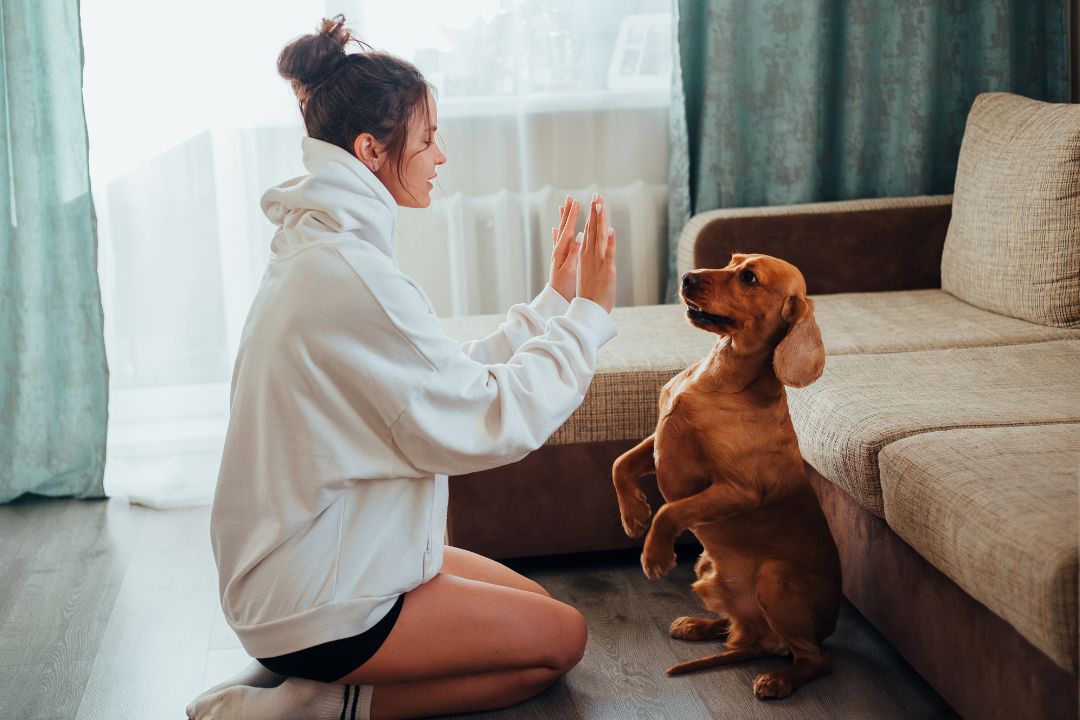
Think about your own animal companion. You may know that particular look that means, “I want to go outside.” You recognise the sound they make when they are hungry, the excitement in their body when you pick up their leash, or the quiet way they come and sit beside you when something feels wrong.
That, too, is animal communication.
But there is another layer that I explore in my work as an animal communicator, one that goes beyond simply observing behaviour and body language.
Before we talk about intuitive animal communication, it is important to understand something fascinating: animals are exceptionally good at communicating with us.
When they stare at us or follow us, you usually interpret that behaviour as a their will to ‘go out’ or their wish to have a ‘treat’ but sometimes that stare or change in behaviour isn’t the usual one, you feel that they are not responding to what you are interpreting rather they are wanting to tell you something more that you are not able to understand. The sudden change in behaviour that goes beyond their usual pattern is what ‘animal communication’ is all about.
When someone asks me, “Can you talk to animals?” I don't mean that I sit down with a dog and hear a human-like voice answering me.
Animal communication, as I practise it, is about receiving and interpreting information in a way that is different from ordinary verbal conversation.
During a session, I receive messages in the form of images, feelings and knowings. I establish this communication channel by connecting myself energetically to the animals. (Book a session now! And you will see how I connect to your pet and tell what they are trying to tell you https://www.humansofanimalland.com/services/animal-communication )
I remember sessions where an animal has drawn attention to something as simple as a particular sleeping spot, a toy that has been put away, a food preference or a change in routine.These details may sound small to us but for the animal, they can be enormously important.
This is something I encounter quite often.
A pet parent may come to me because their animal has suddenly become fussy with food. The obvious assumption is that the animal is simply being stubborn.
But during an animal communication session, the conversation can sometimes reveal that the issue is connected to something else, the texture, smell, routine, environment or even pain in the gum or their tummy hurts when they eat.
Of course, communication is not a substitute for veterinary evaluation. If an animal stops eating, loses weight, appears lethargic or shows other concerning symptoms, medical causes need to be investigated first.
But understanding the animal's perspective can sometimes give the human another piece of the puzzle. And that is often what I find most valuable about this work.It isn't about proving that an animal can magically answer every question.It is about listening differently.
Some of the most memorable sessions I have had are not about food, toys or behaviour at all.They are about relationships.
A pet parent may ask, “Does my dog know how much I love him?”
Or, “Why has my cat become distant since we moved?”
Or, “Does my animal understand what happened?”
These questions often come from a very human place: worry, guilt, confusion or simply the desire to understand someone we love but cannot have a conventional conversation with.
What I try to do during a session is create space for that relationship to be understood from the animal's perspective.
Here's something I often tell people:
You don't necessarily need to become an animal communicator to communicate better with your animal. (Our ALIGN Workshops are all about connecting better with your pets in daily life. Click here to know more https://www.humansofanimalland.com/classes )
Start by slowing down.
Pay attention to what happens before a particular behaviour.
Notice which environments make them relaxed and which make them uncomfortable.
And most importantly, listen without immediately trying to correct or interpret everything.
Your animal may already be communicating with you.
We all have the ability to connect to our animals but as we are so occupied with other responsibilities that we do not get the time and stillness that is needed to connect with them energetically and therefore, animal communicators come as a viable help and become the medium to do the needful.
My answer is: yes, but perhaps not in the way we traditionally imagine talking.
My experience as an animal communicator has taught me that every animal has its own way of expressing itself, and sometimes the most meaningful conversations happen when we start listening intently and willingly of what they are trying to communicate.In an animal communication session, there is a much deeper story underneath those everyday signals.
You can ask about behaviour, emotions, preferences, changes in routine, relationships, fears or experiences that may be affecting your animal. Many pet parents also use sessions to better understand unexplained behavioural changes or to strengthen their connection with their companion.
Animal communication cannot be a tool to diagnose a ‘medical condition’ but saying that if your animal chooses to share anything that they are experiencing medically they can do that during the animal communication session.
Not necessarily. Just like people, animals have different personalities. Some may seem very expressive, while others communicate more subtly. The quality and nature of a session can also depend on the animal's comfort, circumstances and willingness to engage. I see animal communication as a way of creating another channel of understanding, not as a guaranteed answer to every question. They communicate through images, feelings and knowings and I give them to you a better understanding of things that they are sharing with me during the session.

2022- © Humans of Animal Land All Rights Reserved.
 +91 89299 12919
 18887265159